Water Quality at Handover: Keep Empty Floors in the Plan
A completed plumbing system may wait weeks for normal use. Give phased occupancy its own water-quality plan, named operator and evidence-based release decision.
Treat handover as a change of operating conditions
ASHRAE’s published scope for Standard 514-2023 spans design, construction, commissioning and operation of new and existing building water systems. Its purpose addresses physical, chemical and microbial hazards, rather than one organism or one handover test. [1]
OlbrichCo recommends treating water-quality handover as a controlled transition, not a certificate attached to practical completion. Keep pressure testing, leak checks and water-quality acceptance as separate decisions. Define who is responsible from first filling until normal occupancy, including the interval when contractors have left but the building is only partly used.
For an Iranian office, hotel or multi-unit development, ask the owner and water-system specialist to prepare an occupancy scenario before setting the commissioning date. Which areas open first, which remain empty, and which common plant serves both? Make the proposed opening sequence an input to the water-management plan, not a late change explained after the keys are delivered.
Limit this package to the building’s potable cold- and hot-water systems. Ask competent specialists to identify any additional requirements for healthcare, cooling towers, fountains, pools or industrial processes; those need their own assessments. Do not use this note as drinking-water clearance or as a procedure for investigating illness. Suspected contamination requires the appropriate local water-health response.
Map the filled but unused parts of the system
EPA warns that prolonged low or absent use can create stagnant water in building plumbing and compromise water quality. Its guidance calls for managing stagnation during closure and addressing water quality before reopening. [2]
Apply that concern to a walked, as-built water-system map. Show the incoming supply, storage, treatment equipment, heaters, circulation and return paths, valves, branches and outlets. Add each area’s status: not yet filled, under commissioning, maintained but unoccupied, occupied, or excluded pending work. Give the status an owner and a revision date.
Do not assume a floor boundary is a hydraulic boundary. Have the designer confirm how empty wings or tenant areas connect to occupied areas and shared storage. Request a specific decision for temporary connections, unused branches and future extensions. Any isolation, removal or reconfiguration should follow an approved design and method, with checks against other essential services.
For the actual Iranian site, establish supply arrangements and expected use with the supplier and operator rather than assuming a generic national pattern. If storage, intermittent supply or delayed occupancy is present, put it explicitly in the assessment. Keep the map available in Persian on paper and offline; mark unknown connections for investigation, not as verified as-built information.
Name the person responsible between installation and occupancy
CDC describes water-management programs as ongoing processes: a team defines the system, identifies hazards, chooses monitored controls, plans responses to deviations, checks effectiveness and keeps records. The program must suit the particular building and its users. [3]
Our proposed interim plan names an accountable owner, a daily operator and specialist support before filling. Set the start and end of each party’s responsibility in the contract. A maintenance task should not disappear because the installer considers the work complete while the facilities team considers the building not yet received.
Use a short control register for each relevant zone: hazard or unresolved condition, control location, approved limit and units, monitoring method, frequency, responsible person, response and closure evidence. The competent water-management team must establish the actual criteria from applicable requirements and site conditions. A blank criterion is an unresolved decision, not permission to proceed.
Before accepting the plan, check that the people, instruments, consumables and laboratory services it requires can be provided throughout the interim period. Price access, repeat visits and delays transparently. Make extensions of the unoccupied period trigger a reviewed operating plan and a funded responsibility, rather than silently extending a one-time commissioning visit.
Connect every reading to a safe response
CDC’s monitoring guidance identifies temperature, disinfectant residual and pH, alongside slow-moving areas, as useful control information. It also recommends comparing disinfectant residual at the supply and at outlets; one location does not describe the whole system. [4]
Ask the specialist to choose representative and risk-relevant monitoring points, including the incoming boundary and remote or low-use locations where appropriate. Specify the instrument, checks, units, timestamp and operating condition for each reading. Agree how missing data, inaccessible outlets and out-of-limit results affect the release decision. A green dashboard without a defined response is not an operating plan.
Where flushing is selected, commission a location-specific method with an endpoint, sequence, verification and safe discharge arrangement. Plan protection against scalding, aerosols, flooding and exposure to treatment chemicals. Only trained, authorized personnel should implement specialist-approved controls. This article does not prescribe a universal flushing duration, temperature setpoint, disinfectant dose or tank-entry method.
At sites with constrained water availability, account for the volume used and coordinate the work with the supply and drainage arrangements. Seek specialist-designed ways to reduce avoidable waste without weakening the control objective. Do not shorten an approved process merely to meet a water-use target, or redirect discharged water to another use without a separate suitability and safety decision.
Procure the evidence, not just a laboratory report
CDC’s consultant guidance asks owners to examine relevant experience, environmental assessment skills, laboratory accreditation and proficiency testing, remediation capability and possible commercial conflicts. It explicitly recognizes that buildings need different approaches. [5]
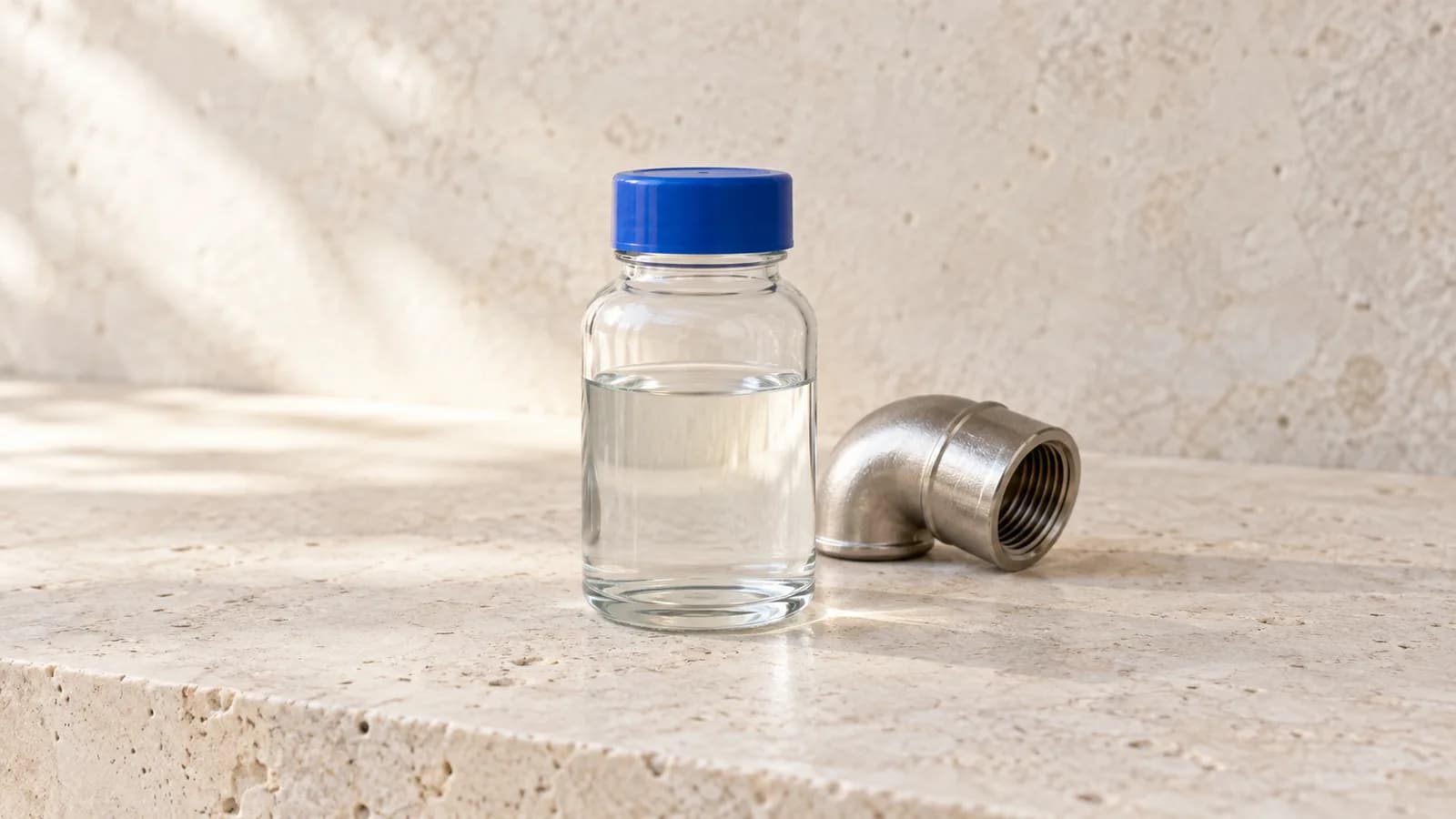
Before appointing a provider, ask what question each proposed sample will answer and how the result changes an action. Agree locations, timing relative to treatment or flushing, collection and transport requirements, analytical methods, reporting limits, turnaround and interpretation. Have the competent specialist and laboratory define the protocol; do not turn the cover’s bottle metaphor into a sampling instruction.
Keep routine control readings separate from microbiological or chemical investigations. Ask the specialist to state the scope and limitations of every conclusion. Do not present a result from one outlet and one time as clearance for every connected area, or a Legionella-focused assessment as proof of complete drinking-water compliance. Define the relevant release evidence for the intended use with the responsible local parties.
Pre-agree what happens when the evidence is missing or unacceptable: restrict the affected use, investigate, implement approved corrective work and obtain the required verification before release. Record who can authorize each step and how occupants receive instructions. A certificate deadline must not become a reason to improvise chemical treatment or bypass a water-health decision.
Hand over an operating obligation with the keys
For each opening phase, assemble one controlled pack: current system map and occupancy status, completed work records, control readings, specialist interpretation, outstanding restrictions, approved operating tasks and named release authority. The receiving operator should demonstrate that they can locate the points, obtain the records and carry out the agreed response. Receiving a folder is not the same as taking control.
We propose tracking the share of scheduled checks completed on time, overdue corrective actions, unresolved low-use areas, response time to deviations and water used for approved control activities. Define the denominator and reporting period. These are management measures, not health guarantees or numerical performance promises; a high completion percentage must not hide a critical unresolved location.
Require review when occupancy is delayed, a zone reopens, plumbing is altered, the supply changes or monitoring shows a persistent problem. Agree the review route and any new verification with the specialist. Reconcile temporary works and exclusions into the final as-built record so that the next operator does not inherit a connection nobody owns.
The owner’s decision is to accept a maintained, understood system for a defined use—not simply a completed installation. Preserve responsibility across the construction-to-operations boundary and keep unoccupied areas in view until their status changes. Contracts, applicable requirements, the water supplier, competent local engineering and water-health advice, and actual operating conditions control the final release.
Sources & further reading
These primary sources support the claims and implementation frameworks used in this field note.
- 1. ANSI/ASHRAE Standard 514-2023 — published purpose and scope
ASHRAE
- 2. Information on Maintaining or Restoring Water Quality in Buildings with Low or No Use
US Environmental Protection Agency
- 3. Overview of Water Management Programs
US Centers for Disease Control and Prevention
- 4. Monitoring Building Water
US Centers for Disease Control and Prevention
- 5. Working with Legionella Consultants
US Centers for Disease Control and Prevention
Sources checked on 17 September 2026. Numbered paragraphs summarize international references; other paragraphs are OlbrichCo’s proposed project controls, not reported results or standard clauses. The ASHRAE reference is its published purpose and scope, not the full standard. EPA’s page was updated in March 2026; its linked restoration documents date from 2020. CDC material is Legionella-focused and does not establish complete drinking-water compliance. These sources are not Iranian law. Applicable project requirements, the water supplier, competent local engineering and water-health specialists, and actual site conditions govern. No universal sampling, flushing, temperature or chemical-treatment prescription is offered.